Short answer: onboarding automation should create the minimum access required from an authoritative employment record, verify every result and connect directly to role changes and offboarding. Fast provisioning without lifecycle control creates dormant access and hidden privilege.
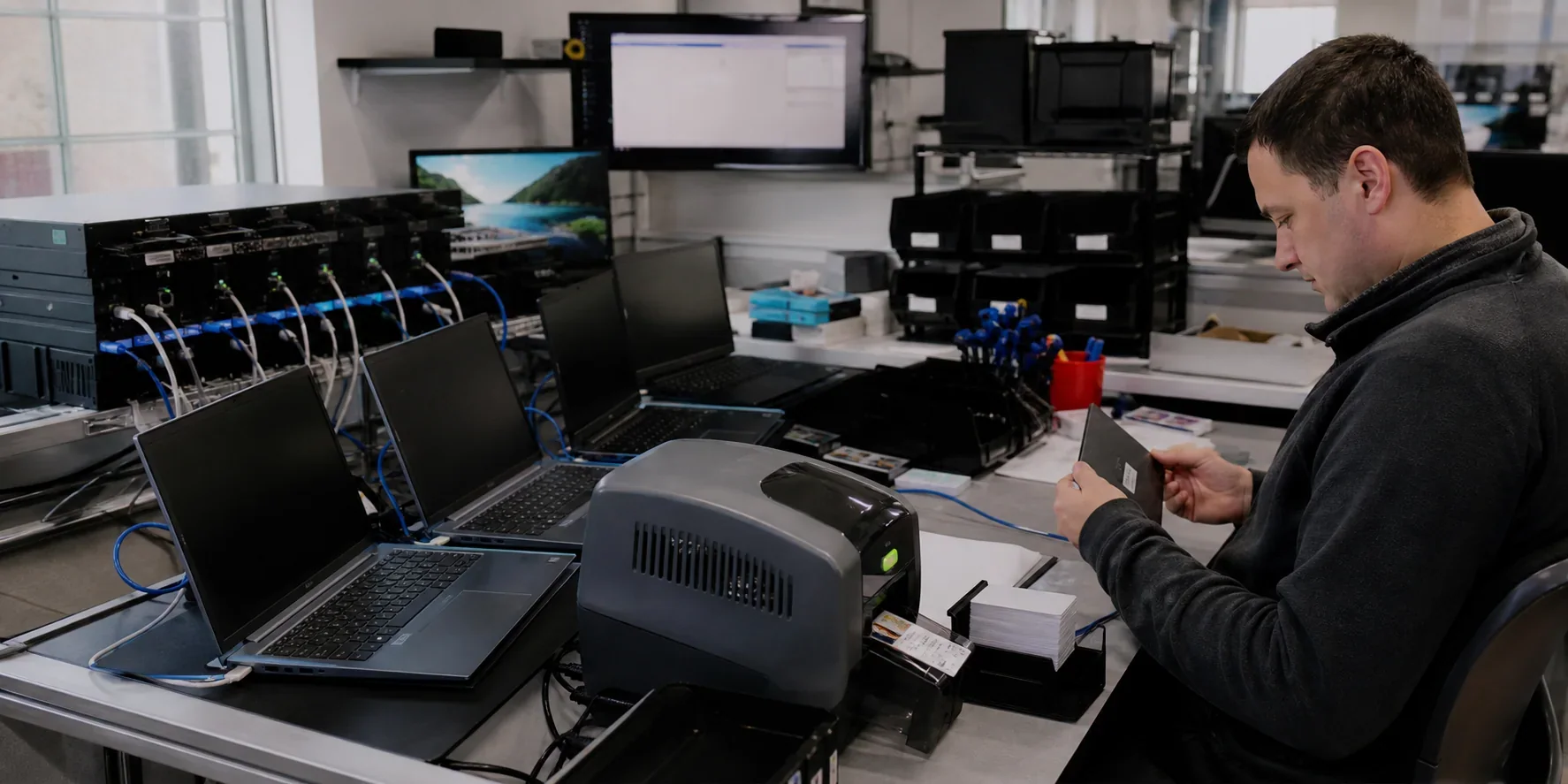
Image disclosure: the hero is an AI-generated editorial illustration and contains no real employee identity or company equipment.
Establish the authoritative event
Define which approved HR state authorizes identity creation. A submitted candidate, signed offer and active employee may be separate states. Require a stable person ID, legal start date, manager, department, location, worker type and approved role profile.
Do not use an informal email as the sole trigger for privileged access. Corrections to name, manager or start date should update the same lifecycle record instead of creating a second identity.
Use role profiles, not copied users
Build profiles for baseline collaboration, department applications, location resources and privileged roles. Each entitlement needs an owner and review interval. Copying an existing employee reproduces historical exceptions and excess access.
Apply least privilege. Separate account creation from high-impact permissions, financial authority, production systems and administrative roles. Route those additions to accountable approvers and record why they were granted.
Provision devices as a verified workflow
Reserve hardware, apply an approved configuration, enroll management and security controls, install required software, bind the device to the correct identity and verify compliance. A completed automation run does not prove the laptop actually enrolled or received encryption policy.
Create an exception queue for unavailable hardware, unsupported location, failed enrollment, duplicate identity, license shortage and late changes. Never hand an unverified device to a new worker simply to preserve a completion metric.
Coordinate the human experience
Send the manager a checklist of responsibilities, not just notifications. Schedule orientation, workplace access and role-specific training. Give the employee one clear status channel without exposing internal security detail.
Avoid sending passwords through ordinary email. Use secure activation and identity-verification methods. Temporary access should expire automatically.
Join onboarding to movement and exit
The same inventory must support promotions, transfers, leave, contractor expiry and termination. Role changes should remove obsolete access as well as add new access. Offboarding should revoke sessions, disable accounts, recover devices, transfer business data and preserve records according to policy.
Track provision-on-time rate, failed steps, access exceptions, licenses without active owners, privileged approvals, device compliance at handoff and removal time after lifecycle changes. Audit a sample against HR truth and application state.
Test delayed starts, duplicate names, manager changes, remote shipping, contractor expiry, cancelled hires, partial provisioning, connector timeout and rehiring. Confirm reruns update rather than duplicate.
Use the Software Stack Planner to map identity dependencies and the governance guide for access ownership.
Decision rule
Automate baseline access only from an approved lifecycle state and verified role profile. Require explicit approval for privilege, verify downstream completion and design removal before scaling creation.
References
- Microsoft Learn: Data policies for Power Platform, accessed August 30, 2026.
- Microsoft Learn: Application lifecycle management basics, accessed August 30, 2026.
- Microsoft Learn: Get started with approvals, accessed August 30, 2026.