Updated and verified: August 15, 2026. Squarespace is transitioning plan families, so the names and economics available to a specific account or country can differ. Confirm the live offer before purchase.
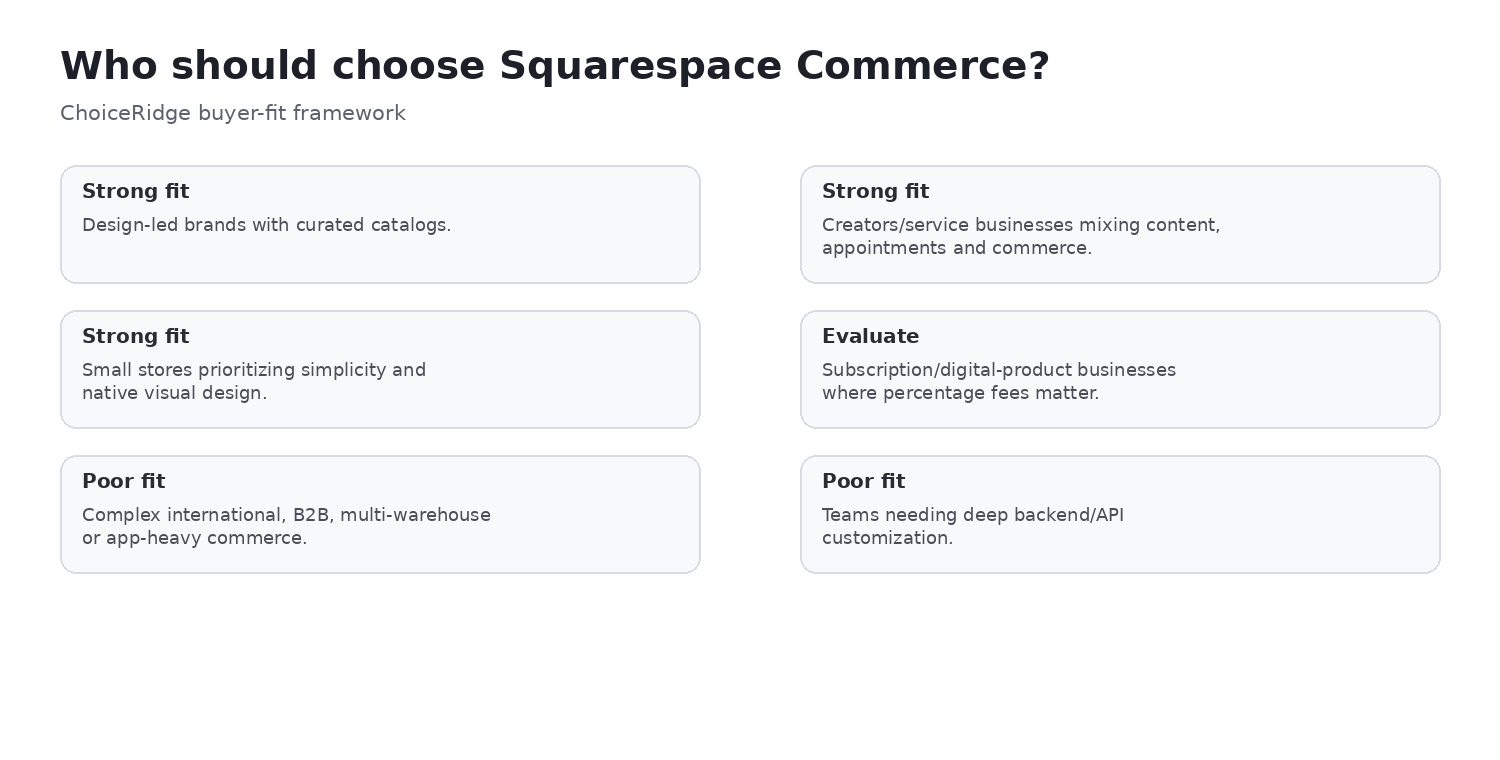
Squarespace Commerce combines a polished content and design system with managed selling tools. Its best fit is a brand, creator or service business whose storefront and editorial presentation belong together. The main 2026 buying task is identifying whether the account is offered the newer Basic, Core, Plus and Advanced family or a legacy plan—and then separating subscription, commerce, payment and digital-product fees.
Quick verdict
ChoiceRidge verdict: Squarespace Commerce is strongest for design-led catalogs, services and digital content that do not require the deepest operational customization. Fee structure and plan transition make the checkout and account-specific terms part of the evaluation.
Plan transition: legacy and current families
Legacy materials and some accounts use Personal, Business, Commerce Basic and Commerce Advanced. Newer US materials use Basic, Core, Plus and Advanced. These families should not be blended into one table: eligibility, feature packaging and fees can differ. Record the exact offer shown in the target account.
Commerce and payment economics
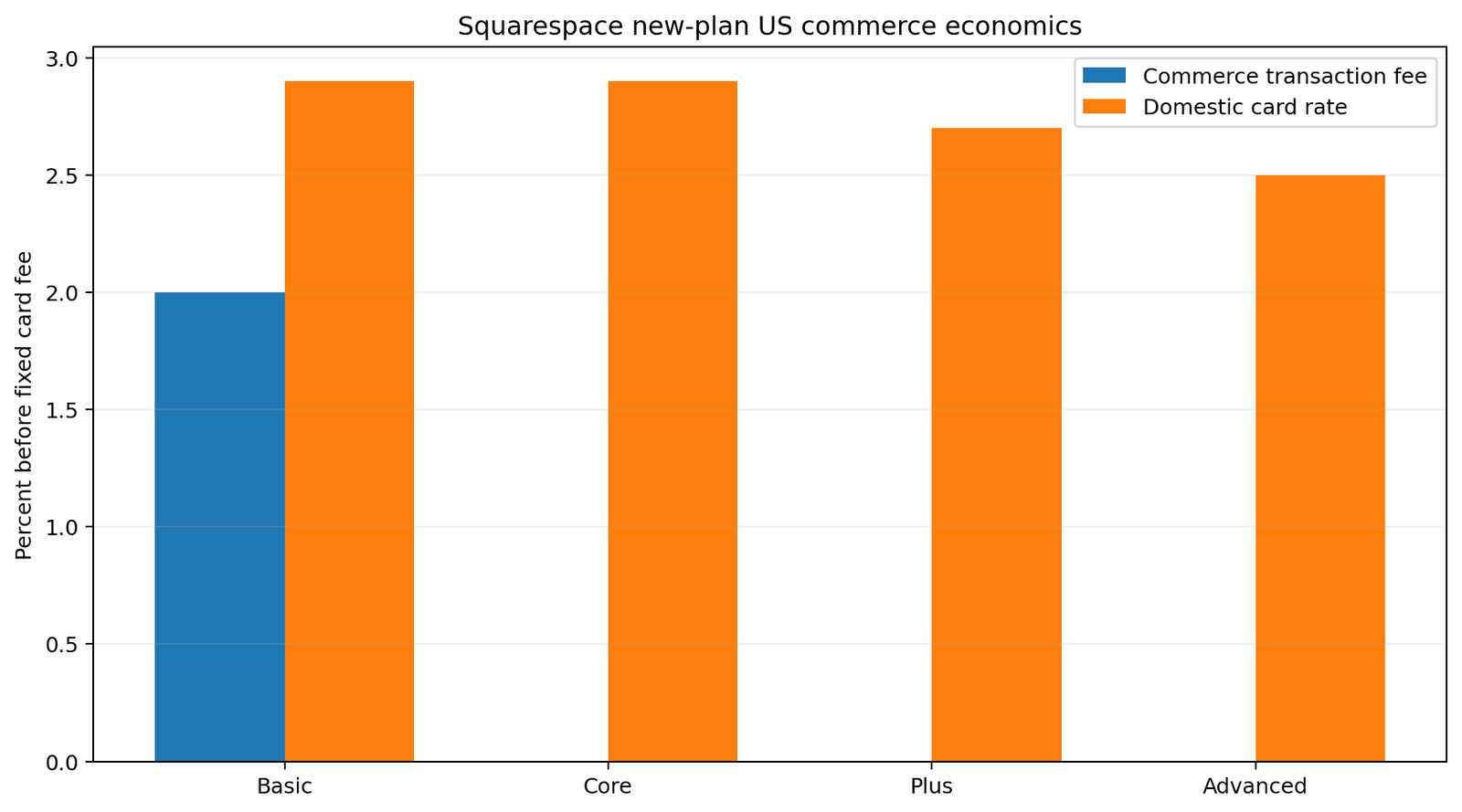
For the newer US plan family, public references list a 2% commerce transaction fee on Basic and no commerce transaction fee on Core, Plus or Advanced. Published domestic-card references are 2.9% + $0.30 on Basic and Core, 2.7% + $0.30 on Plus, and 2.5% + $0.30 on Advanced. These are separate layers.
| Plan | Commerce transaction fee | Domestic card reference |
|---|---|---|
| Basic | 2% | 2.9% + $0.30 |
| Core | 0% | 2.9% + $0.30 |
| Plus | 0% | 2.7% + $0.30 |
| Advanced | 0% | 2.5% + $0.30 |
Digital products and video storage
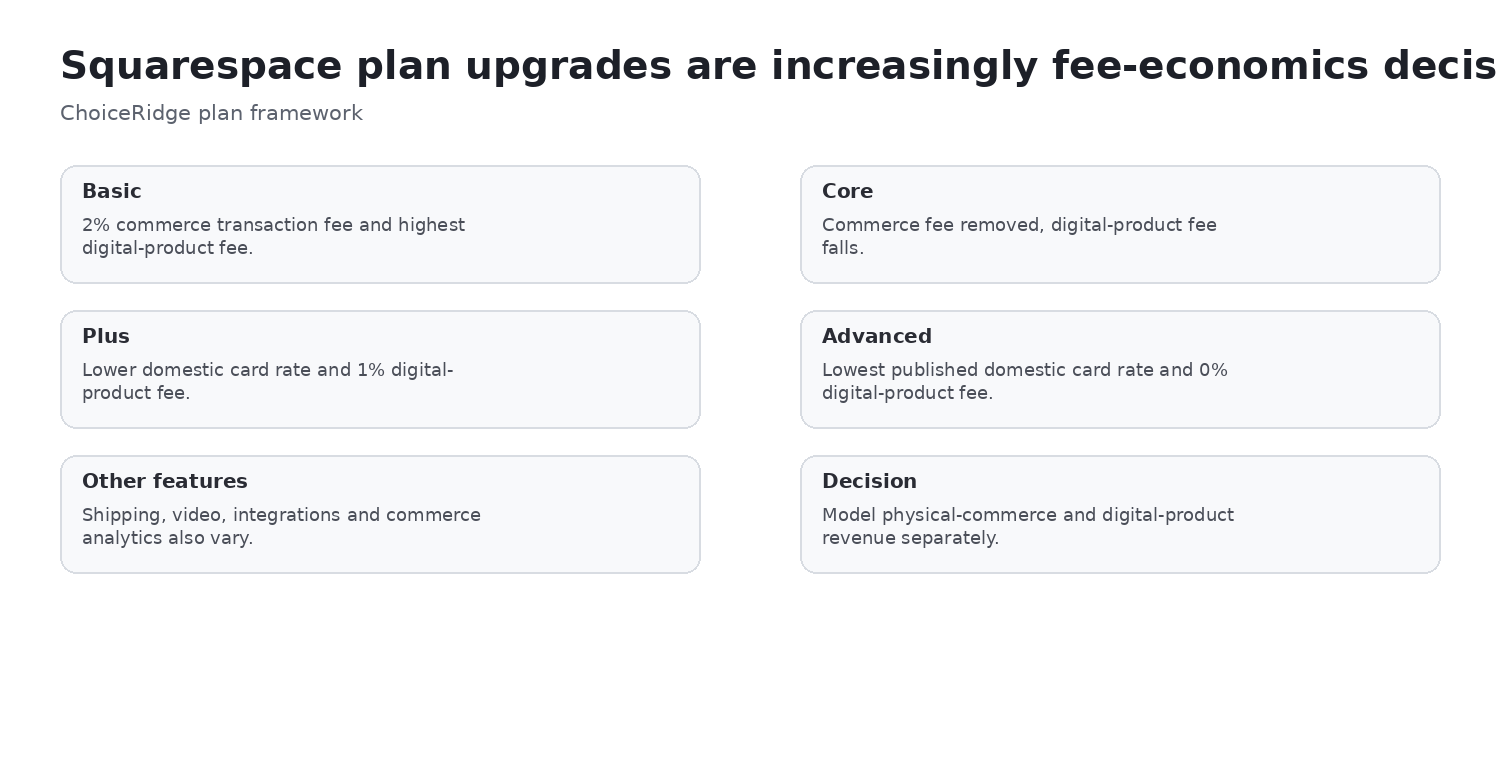
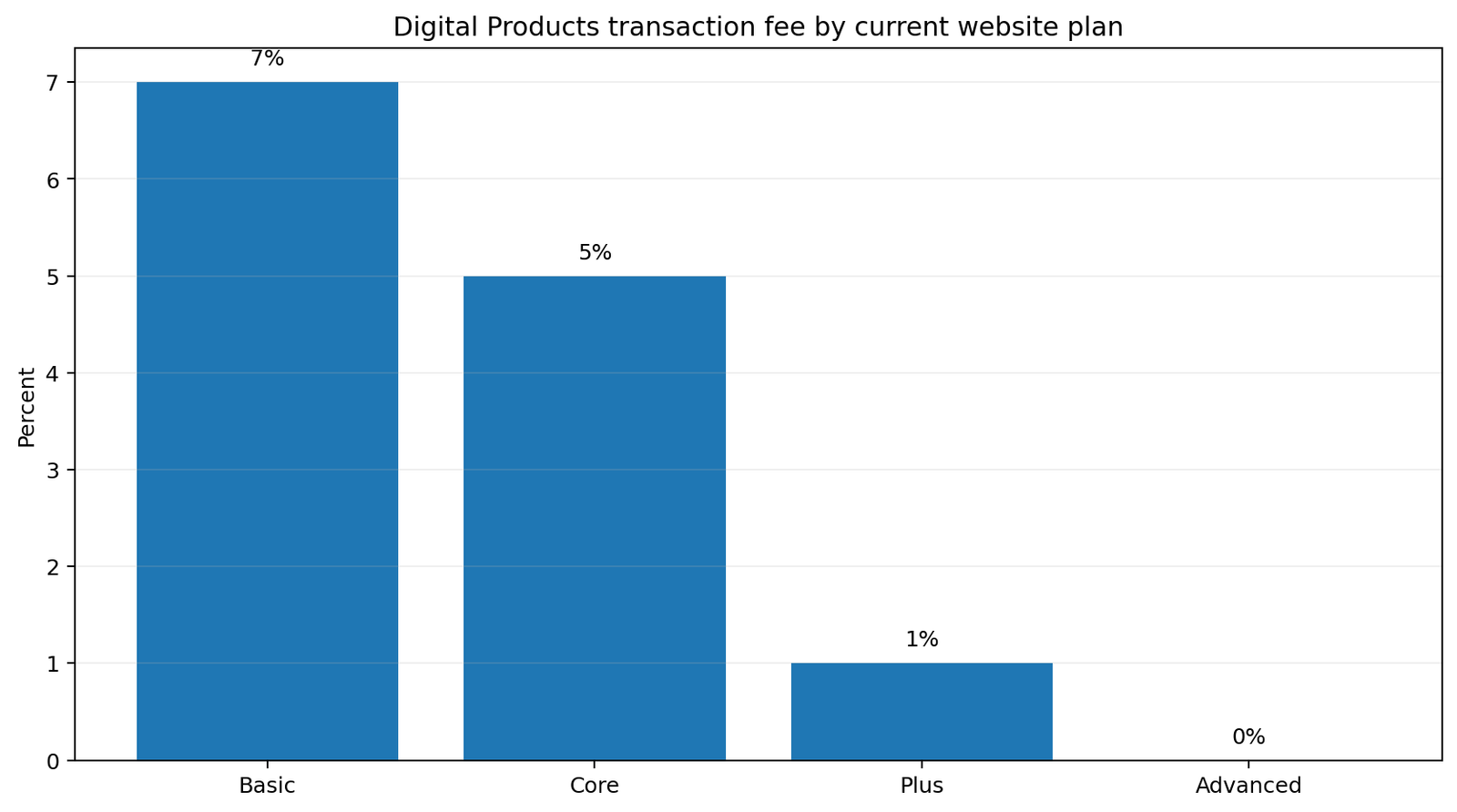
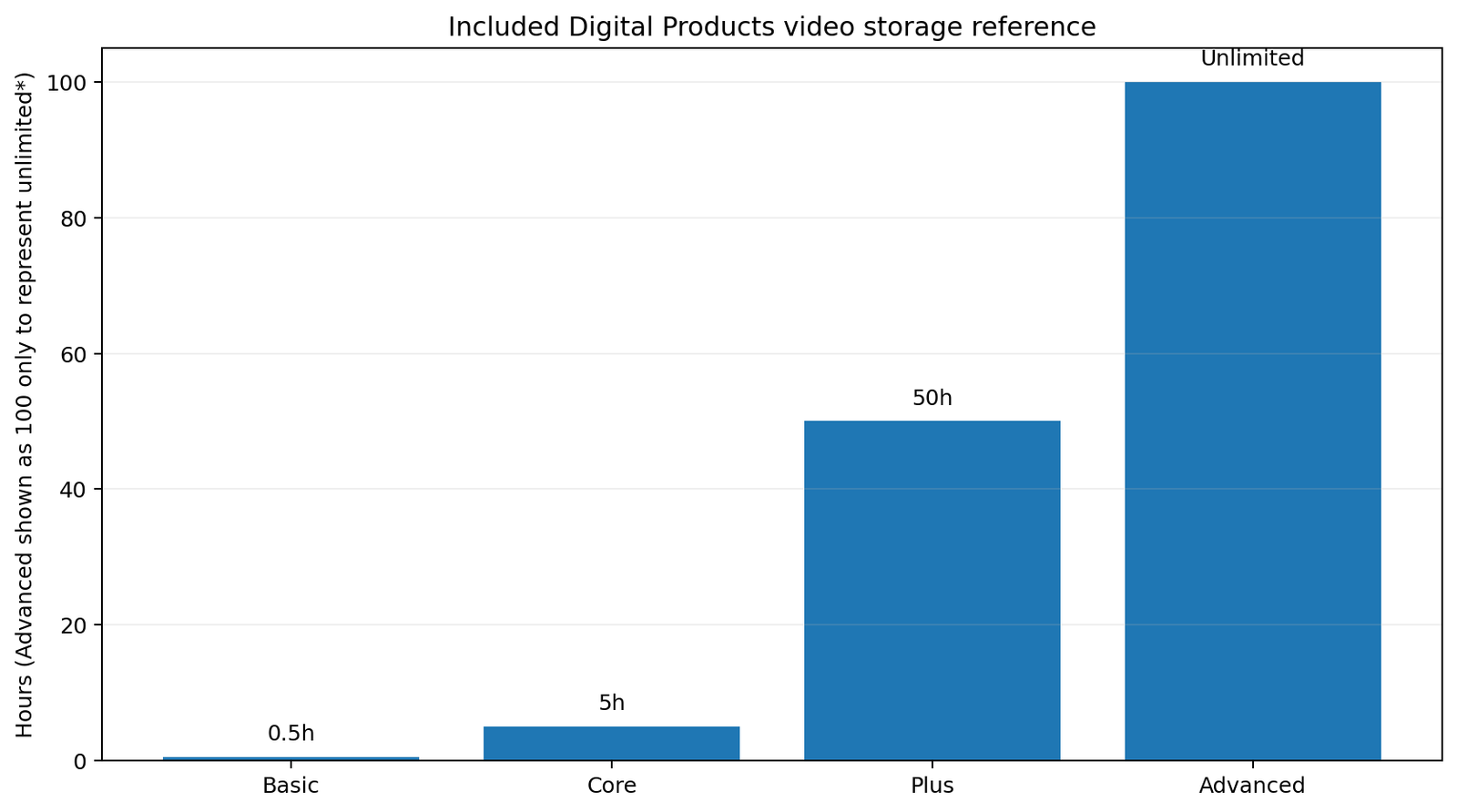
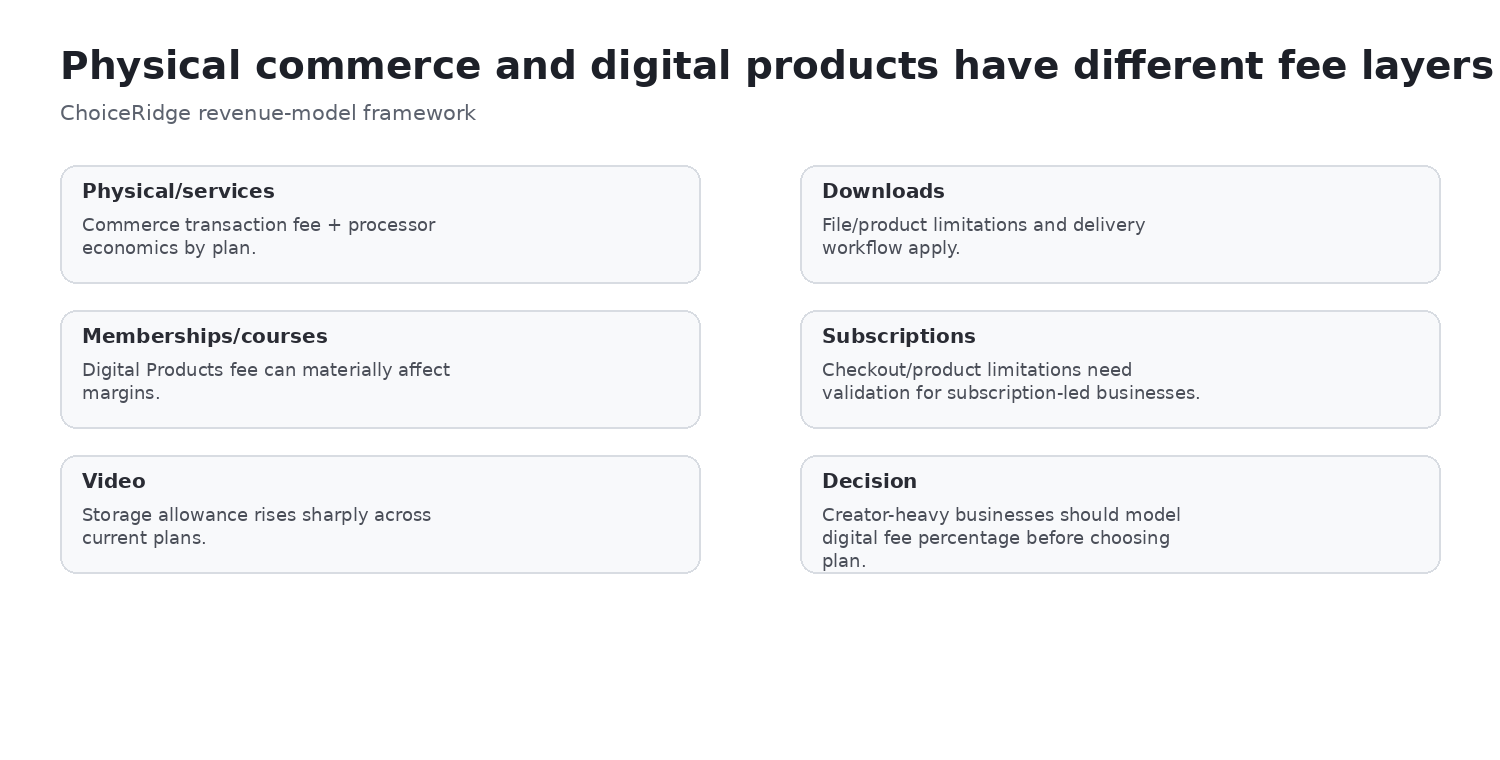
Digital-product fees are a distinct economic layer: current references show 7% on Basic, 5% on Core, 1% on Plus and 0% on Advanced. Video storage is documented at 30 minutes, 5 hours, 50 hours and unlimited respectively. A creator should model digital revenue and media needs, not choose only from the physical-commerce fee table.
Product types and catalog setup
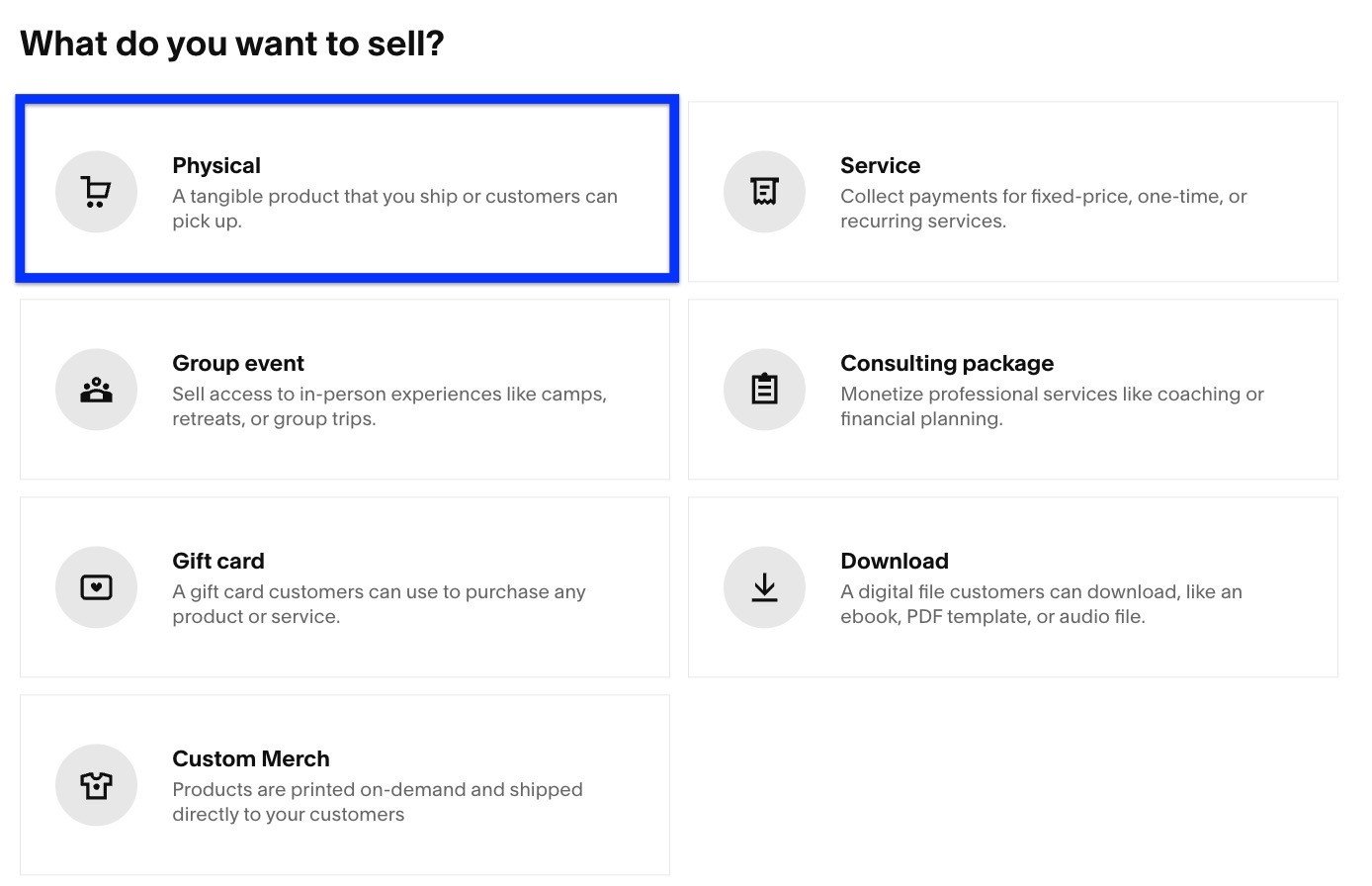
Squarespace supports physical, digital, service and related selling patterns, but product capabilities are not interchangeable. Confirm fulfillment, file delivery, scheduling, subscriptions, variants and tax behavior for the product types actually sold.
Product editing, inventory and organization
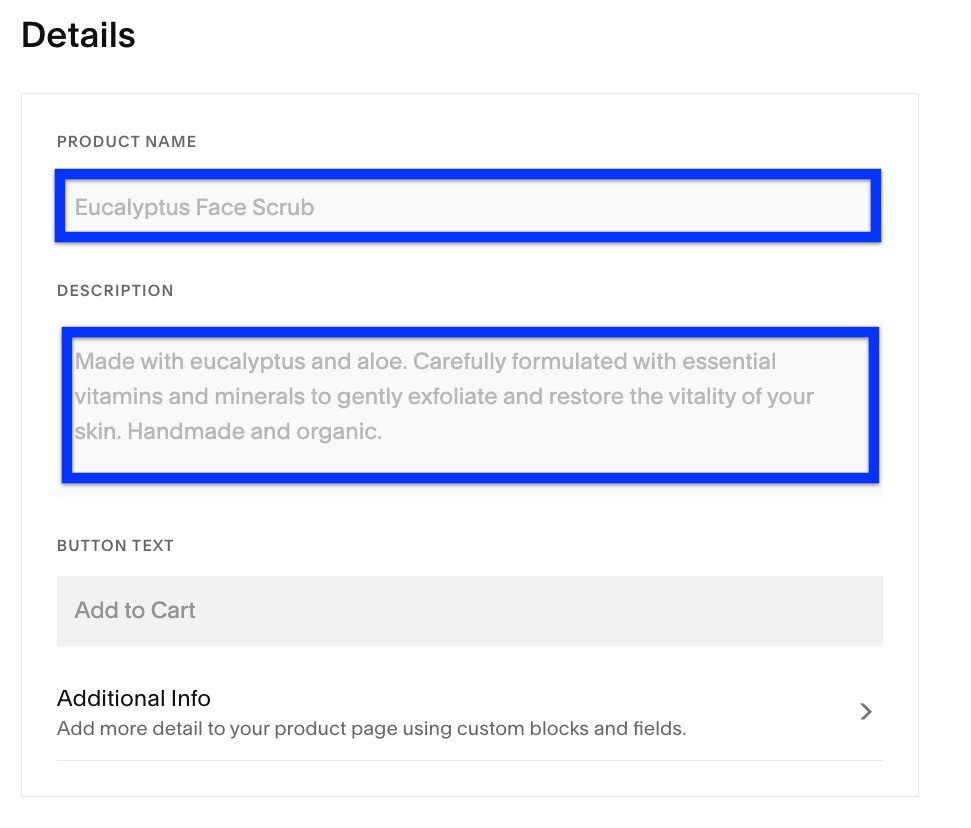
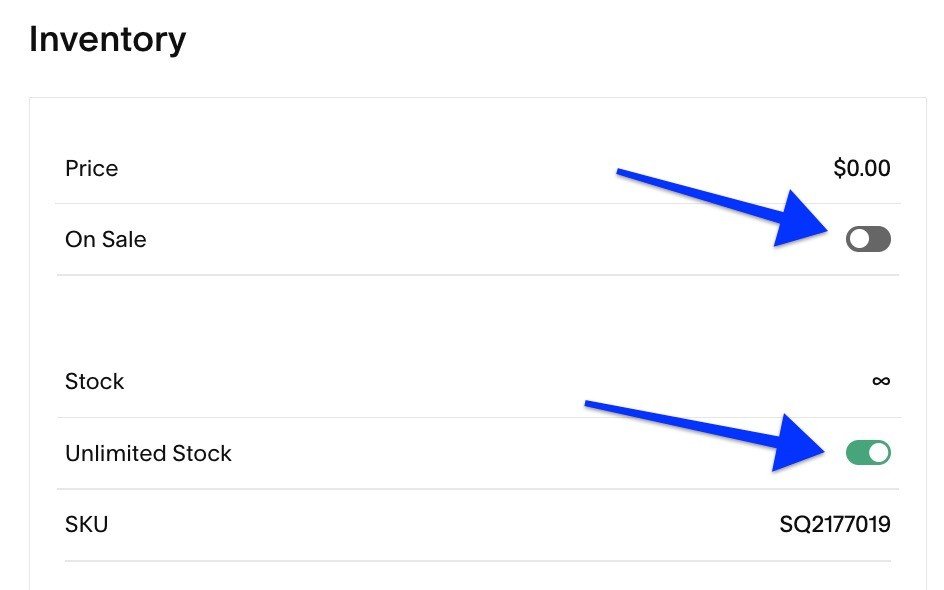
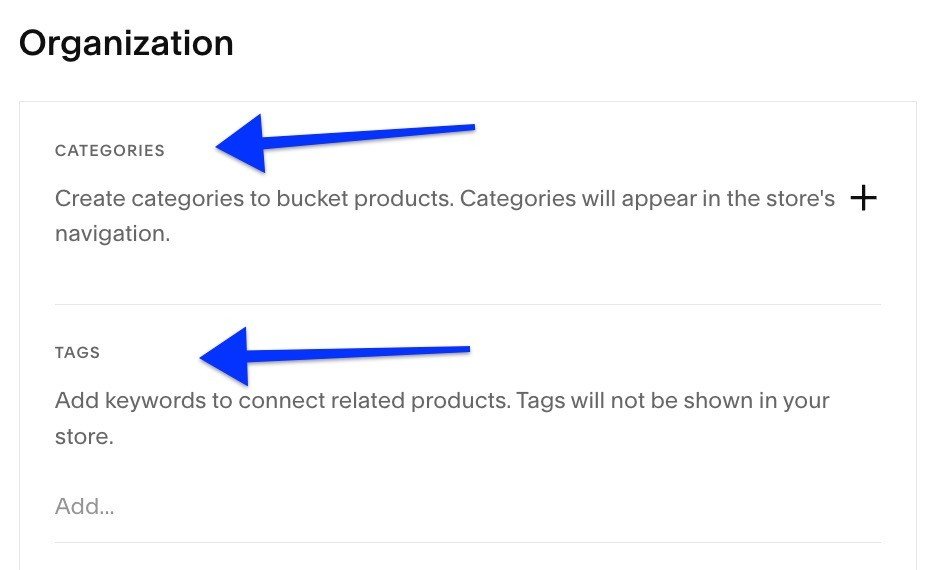
The interface emphasizes approachable merchandising. Test bulk catalog work, variant depth, inventory by location, collection rules, product SEO and migration fields with a realistic sample—not an empty demo catalog.
Orders and customer workflow
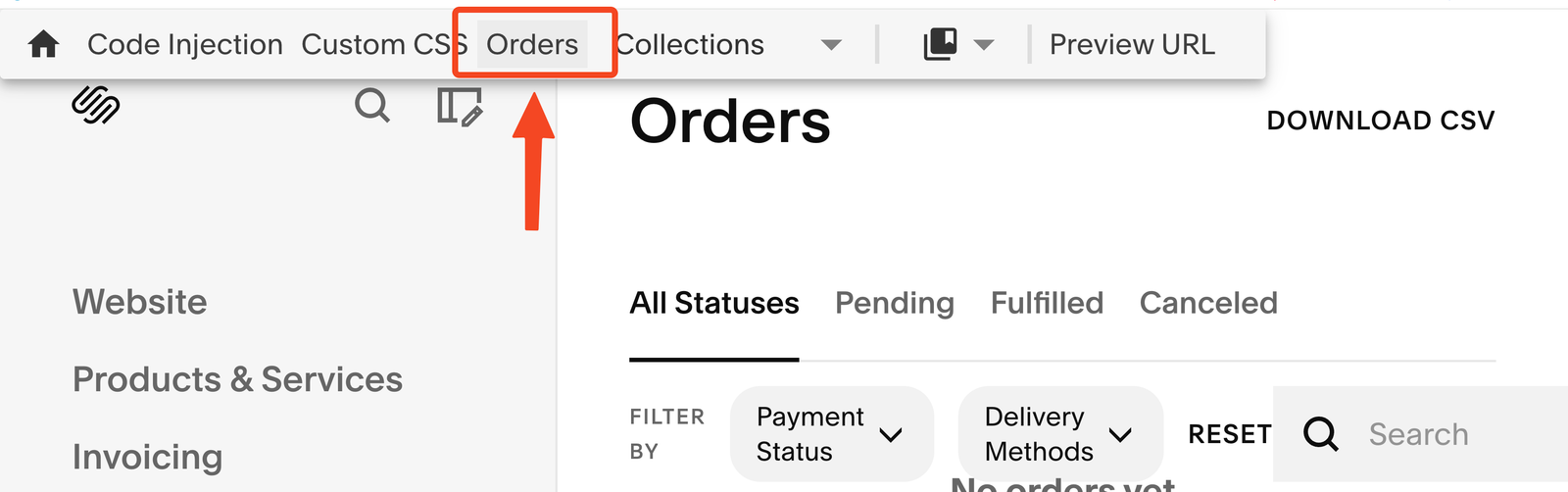
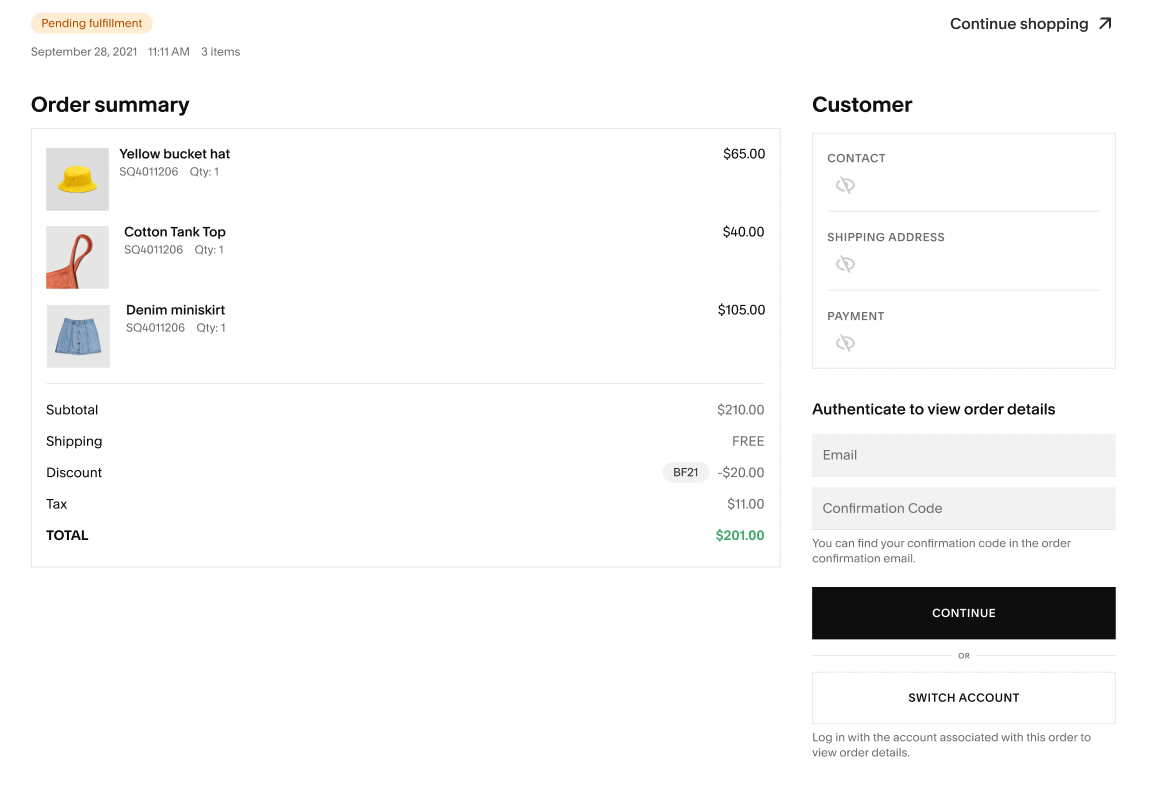
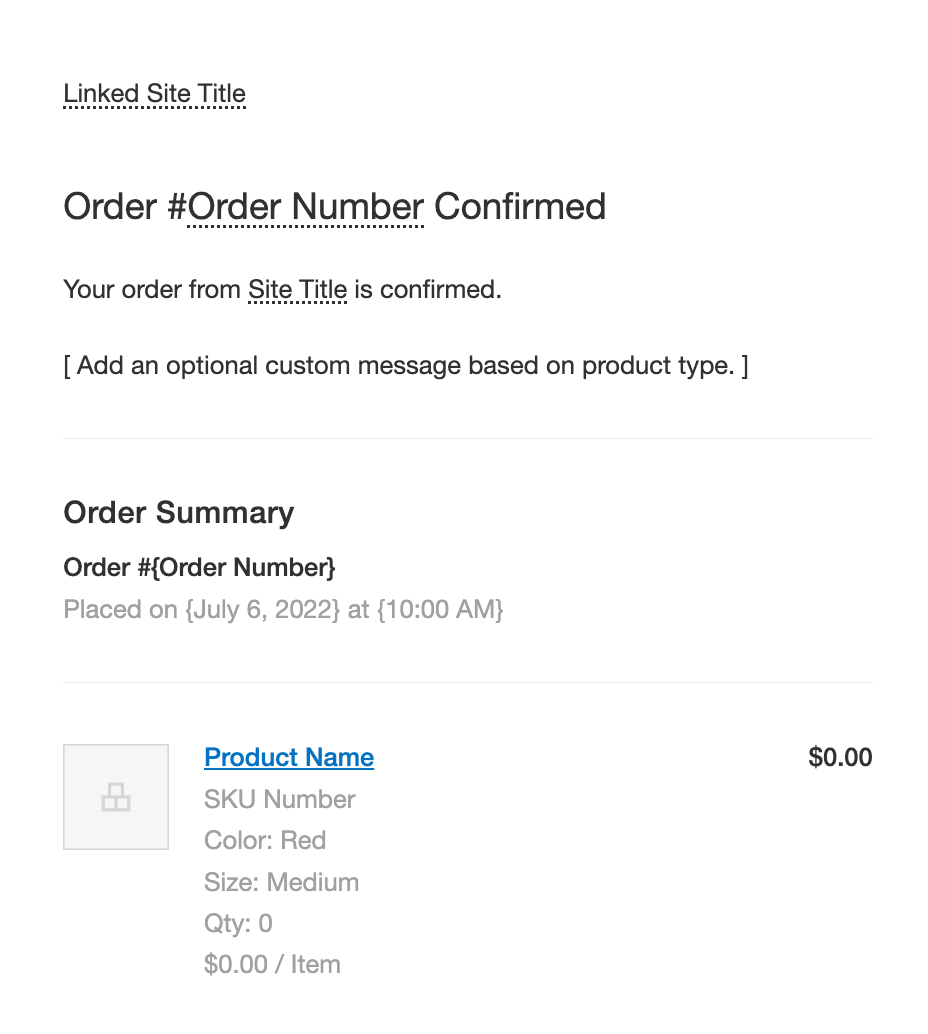
Order management covers the core path from purchase to fulfillment and communication. Validate partial fulfillment, refunds, returns, local pickup, staff permissions and the integrations that carry order data downstream. The orders-panel image below is a public third-party reference and may not match every current account.
Design and content-commerce model
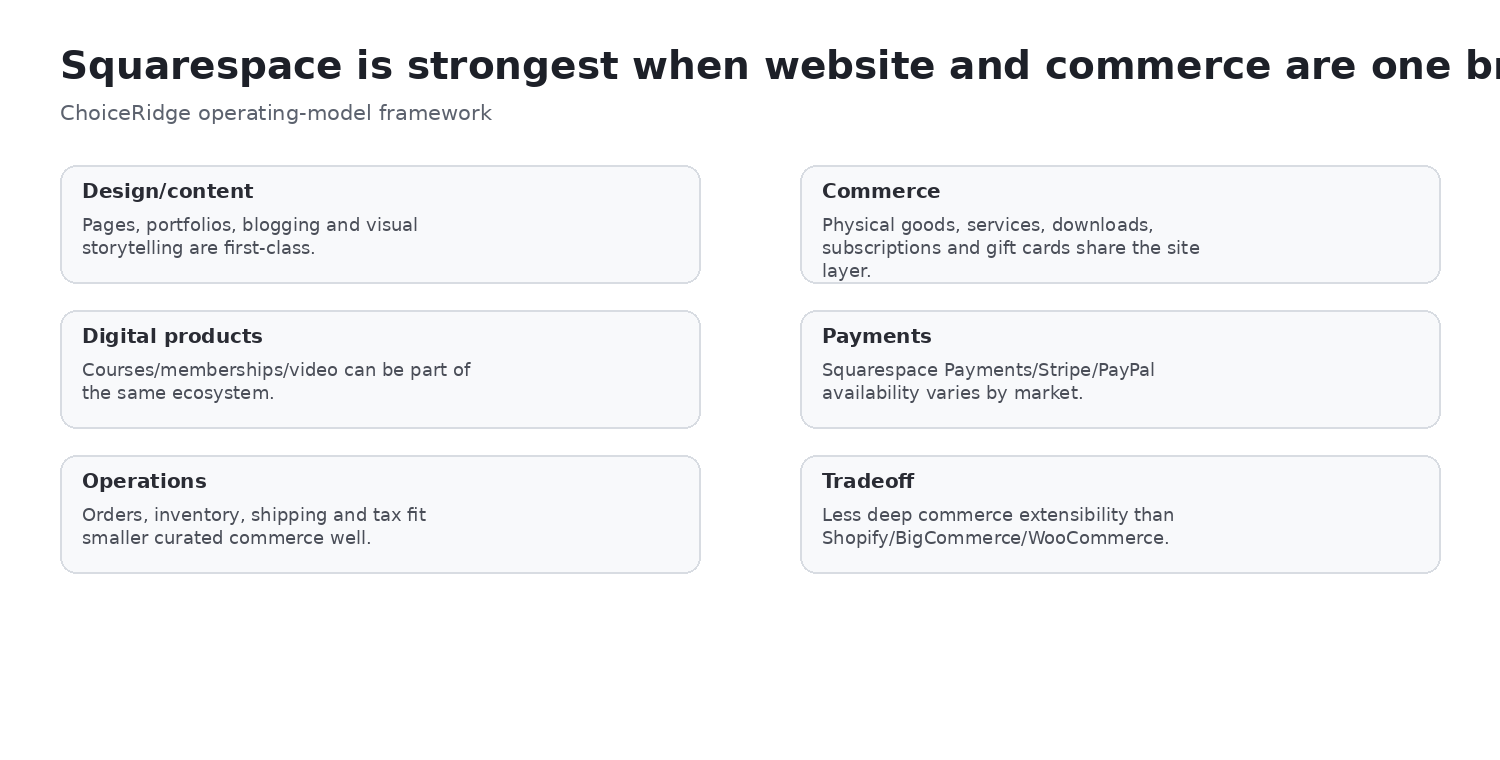
Squarespace’s differentiator is the proximity of brand pages, editorial content, portfolios and products. That reduces tool sprawl for many small teams, though a rigid or highly bespoke commerce workflow may be better served by a commerce-first platform.
Subscriptions and memberships
Recurring products, gated content and digital goods have different feature and fee paths. Define cancellation, failed-payment recovery, member access, taxes and export needs before treating “subscriptions” as a single checkbox.
International selling
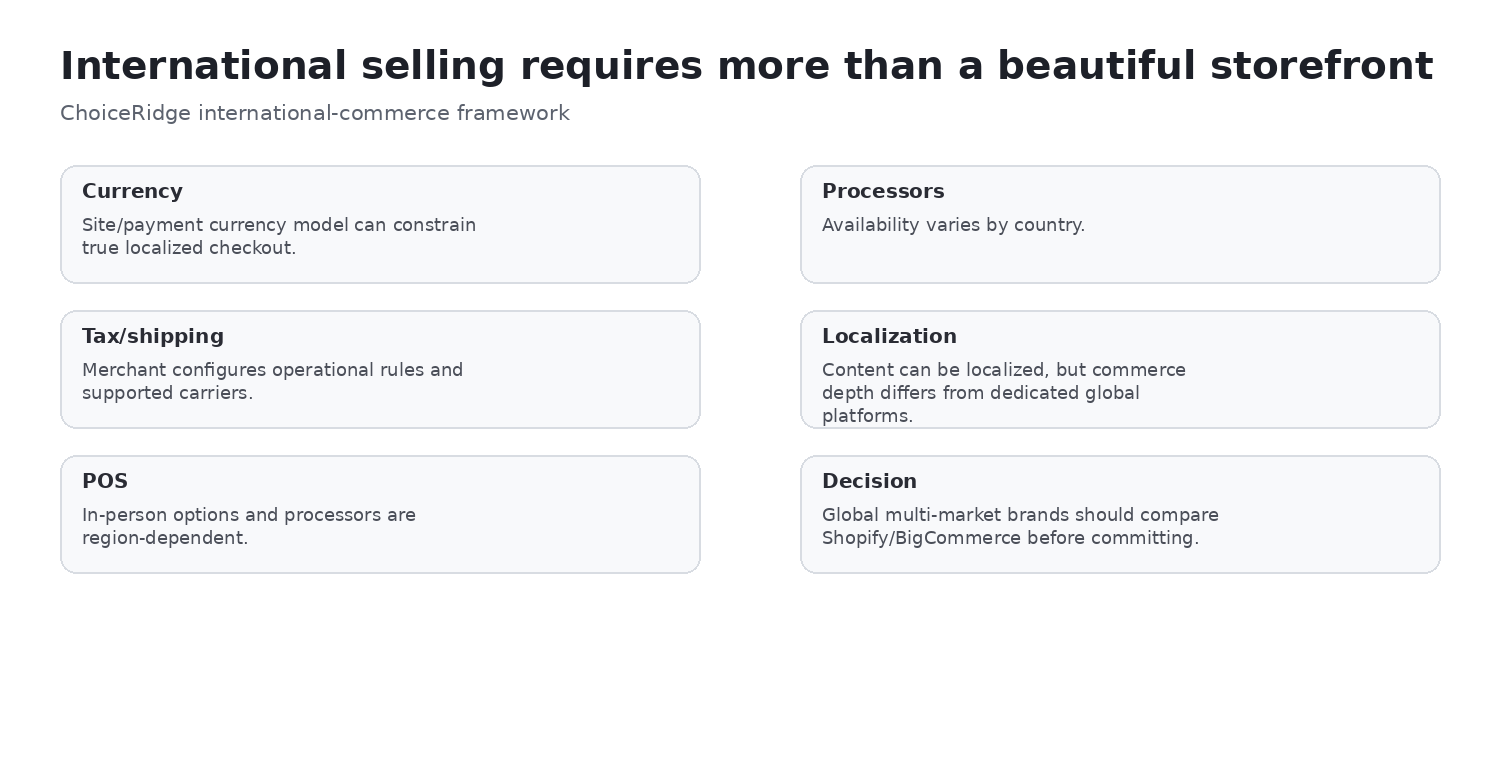
Currency display, checkout currency, settlement, tax, duties, language and local payment methods must be evaluated separately. A visually international site is not automatically a locally optimized checkout in every market.
Payments
Supported processors and Squarespace Payments availability vary. Verify the merchant country, payout currency, card and wallet methods, dispute fees and whether plan-linked domestic-card rates apply to the intended configuration.
Point of sale
In-person selling options are region- and integration-dependent. Confirm eligible devices, inventory synchronization, returns and staff workflow rather than assuming online and physical operations are identical.
Shipping and fulfillment
Shipping rules, labels, carrier rates, pickup, fulfillment partners and notifications determine day-to-day fit. Run test orders for the merchant’s heaviest, lightest and most geographically difficult shipments.
Extensions, APIs and code
Extensions and code injection can expand a site, but Squarespace is not an unrestricted application framework. Confirm API coverage, authentication, webhooks, data ownership and who will maintain custom code.
Total cost of ownership
- The account-specific Squarespace subscription.
- Commerce transaction fee, when applicable.
- Payment processing and dispute/currency costs.
- Digital-product fee and video requirements.
- Extensions, email, domains, migration and custom implementation.
Analytics, SEO and marketing
Squarespace provides integrated site and commerce tools, but advanced teams should test attribution, consent, structured data, product feeds, redirects and export depth. A polished template is not a substitute for merchandising and acquisition operations.
Security, hosting and responsibility
Squarespace manages hosting and the core platform. Merchants still own account security, staff access, catalog accuracy, payment configuration, privacy choices, app connections and regulatory obligations. Use MFA and least privilege.
Buyer fit, pros and cons
| Best fit | Strengths | Trade-offs |
|---|---|---|
| Design-led brand or creator | Strong content, design and commerce cohesion | Plan and fee layers need careful modeling |
| Simple physical/service catalog | Managed operations and approachable editing | Less operational depth than commerce-first systems |
| Complex global or custom seller | Good presentation layer | Localization, APIs and workflow limits may dominate |
Alternatives
- Shopify for a commerce-first managed ecosystem.
- WooCommerce for WordPress control and extension depth.
- BigCommerce for multi-storefront, B2B and headless options.
- Wix Ecommerce for website-builder-led SMB commerce.
Evidence map
Plan and fee claims were checked against current public Squarespace plan, payments and digital-product materials. Official help interfaces support workflow descriptions; one third-party public orders image is clearly labeled. Fit judgments are ChoiceRidge analysis.
What ChoiceRidge verified
- The coexistence of legacy and newer plan families.
- Current US commerce, domestic-card and digital-product fee references.
- Published video-storage allowances.
- Public documentation for products, orders, payments and selling features.
What ChoiceRidge did not test
- No production Squarespace store or payment account was operated.
- No load, checkout-conversion or Core Web Vitals benchmark was run.
- No international settlement, POS device or subscription lifecycle was completed.
- No numeric rating is assigned without a comparable hands-on test set.
Frequently asked questions
Which Squarespace plans are current?
Newer materials use Basic, Core, Plus and Advanced, while some accounts and legacy sources still use the prior family.
Does Squarespace charge transaction fees?
The newer Basic plan has a published 2% commerce transaction fee; Core, Plus and Advanced list none, separate from processing.
What are the card fees?
Current US domestic references range from 2.9% + $0.30 to 2.5% + $0.30 by plan and configuration.
Does Squarespace charge for digital products?
Current references show 7%, 5%, 1% and 0% across Basic through Advanced.
Is video storage unlimited?
Only the current Advanced reference is unlimited; lower plans publish 30 minutes, 5 hours and 50 hours.
Is Squarespace good for subscriptions?
It can fit creator and content-led recurring models, but lifecycle and fee requirements must be proven.
Can it sell internationally?
Yes, with market-specific limitations across currency, localization, payments, tax and settlement.
Does Squarespace include hosting?
Yes, core hosting and platform delivery are managed.
Is it better than Shopify?
Squarespace can be better for content/design cohesion; Shopify is often stronger for a broad commerce ecosystem.
Who should choose Squarespace Commerce?
Brands and creators prioritizing presentation and manageable operations, after validating the exact plan and fees.
Continue comparing
Compare options in the best ecommerce platforms guide and model add-on costs with the ecommerce app cost calculator.