Updated and verified: August 15, 2026. Pricing, fees and limits can vary by contract, market and payment configuration.
BigCommerce is a hosted commerce platform with more operational depth built in than many website-builder-first alternatives. Its strongest case is a growing merchant that values catalog, channel, multi-storefront, B2B or headless options but does not want to own the hosting stack. The key 2026 buying issue is no longer just the subscription: it is the interaction between GMV thresholds, payment-provider choice, overage and apps.
Quick verdict
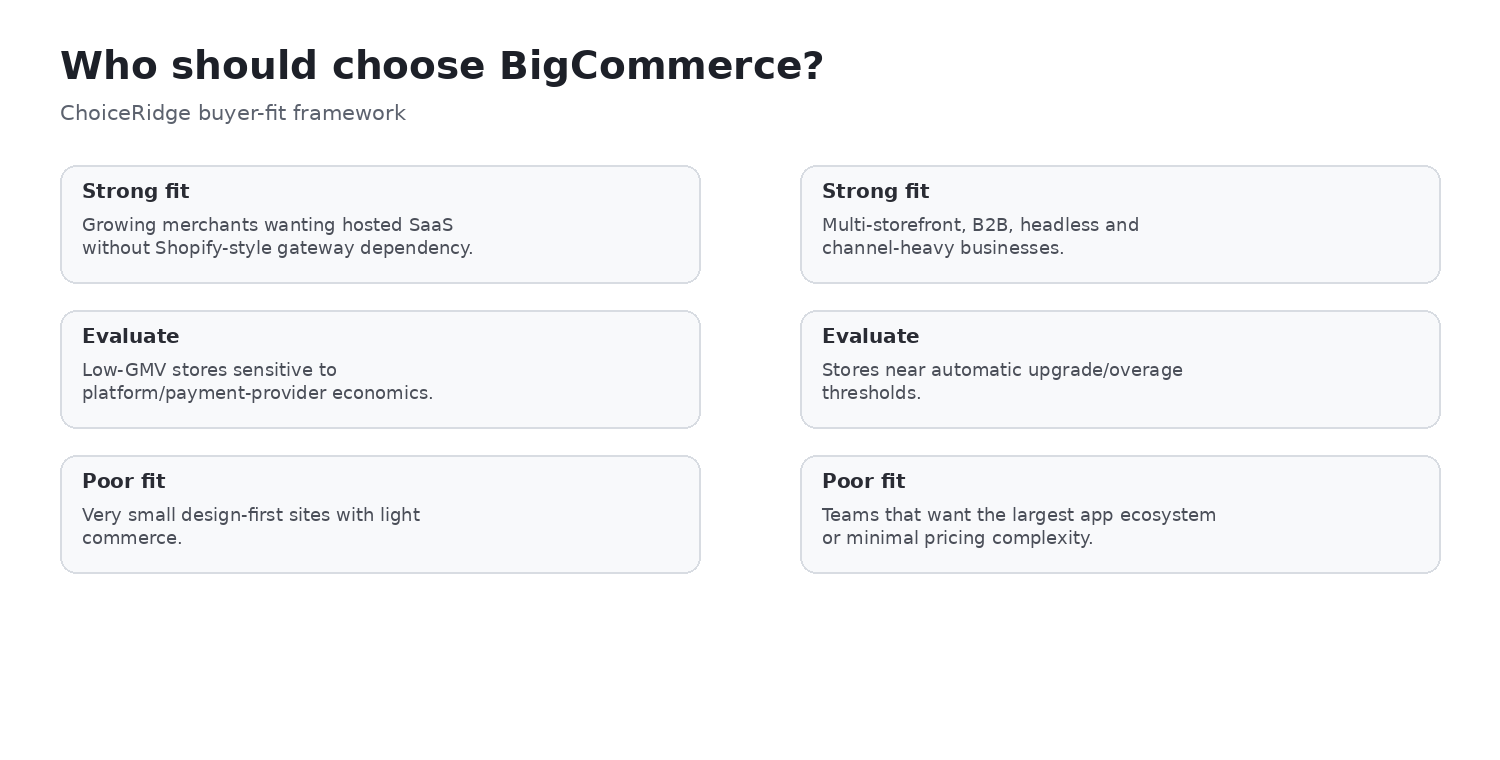
ChoiceRidge verdict: BigCommerce is a strong fit for operationally complex stores that can model GMV and payment economics before signing. It is less compelling for a small catalog that mainly needs a simple visual site and predictable entry-level cost.
Pricing and current plan names
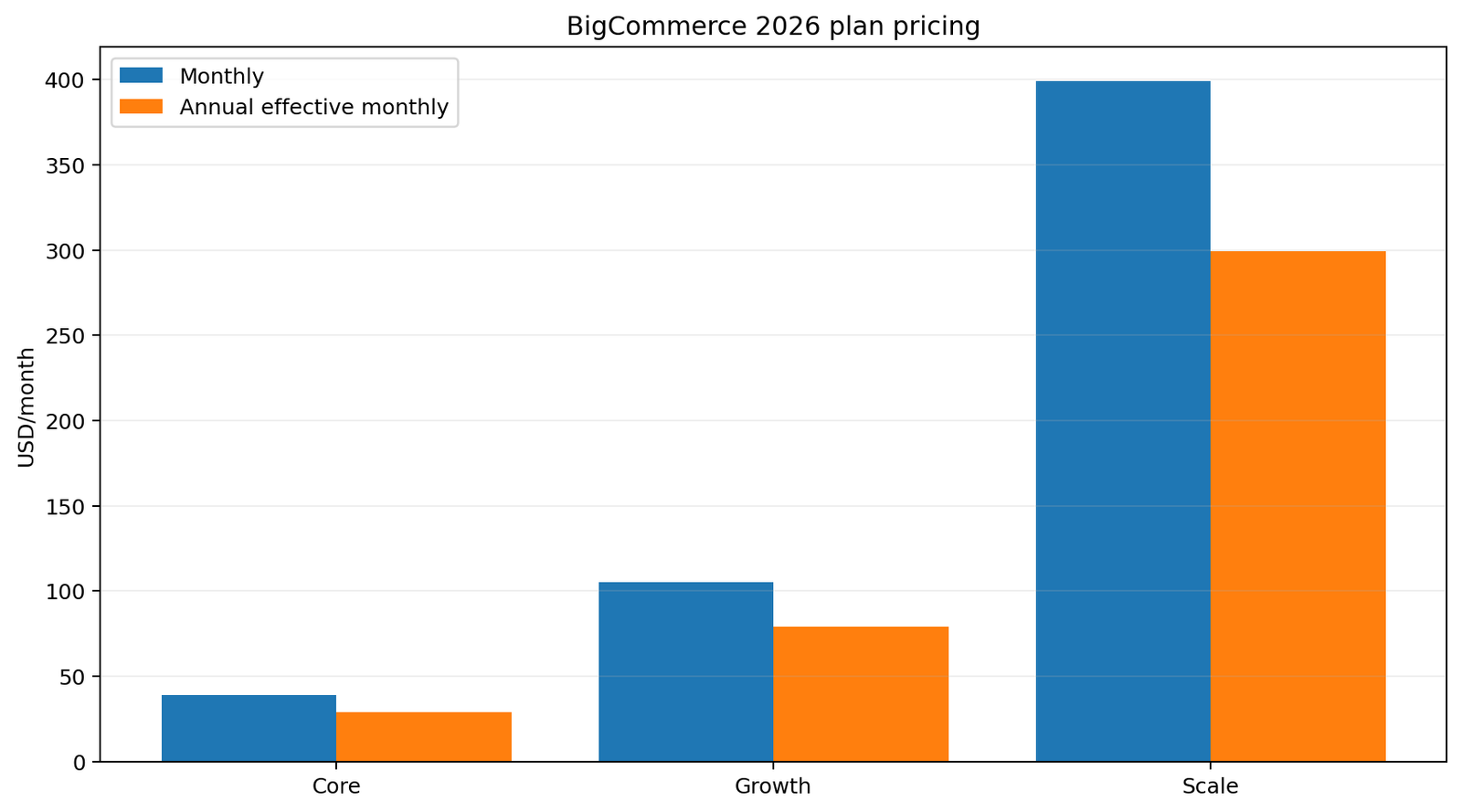
Current public plan names are Core, Growth, Scale and Performance. Older Standard, Plus and Pro names may still appear in historical articles or account contexts; buyers should compare the live offer and contract, not an obsolete plan table.
| Plan | Monthly | Annual-effective | Included GMV / billing note |
|---|---|---|---|
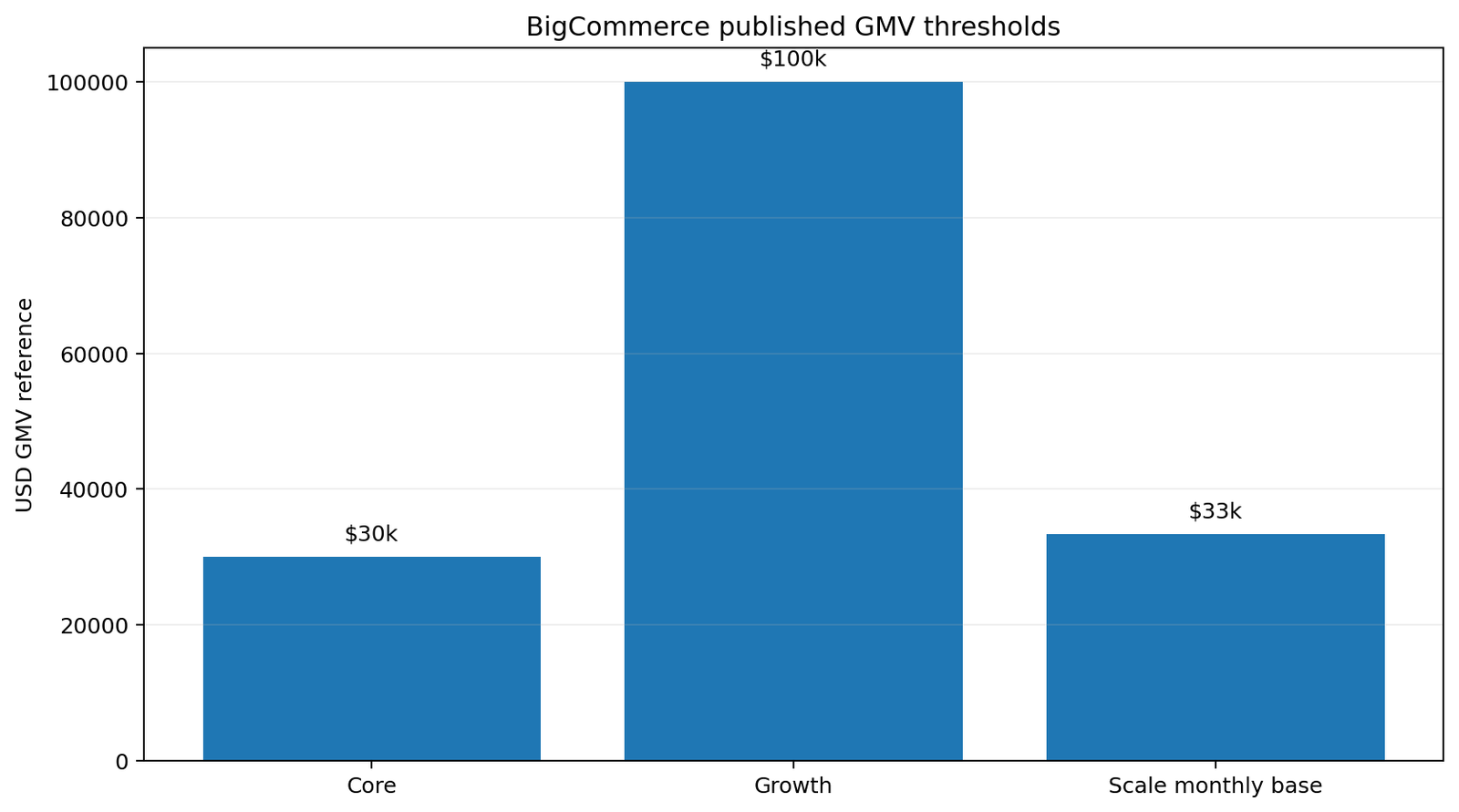
| Core | $39 | $29/month | $30,000 trailing-12-month GMV |
| Growth | $105 | $79/month | $100,000 trailing-12-month GMV |
| Scale | $399 | $299/month | $33,333 monthly GMV; published overage applies |
| Performance | Custom | Starts at $1,499/month billed annually | Custom GMV terms |
GMV thresholds and billing mechanics
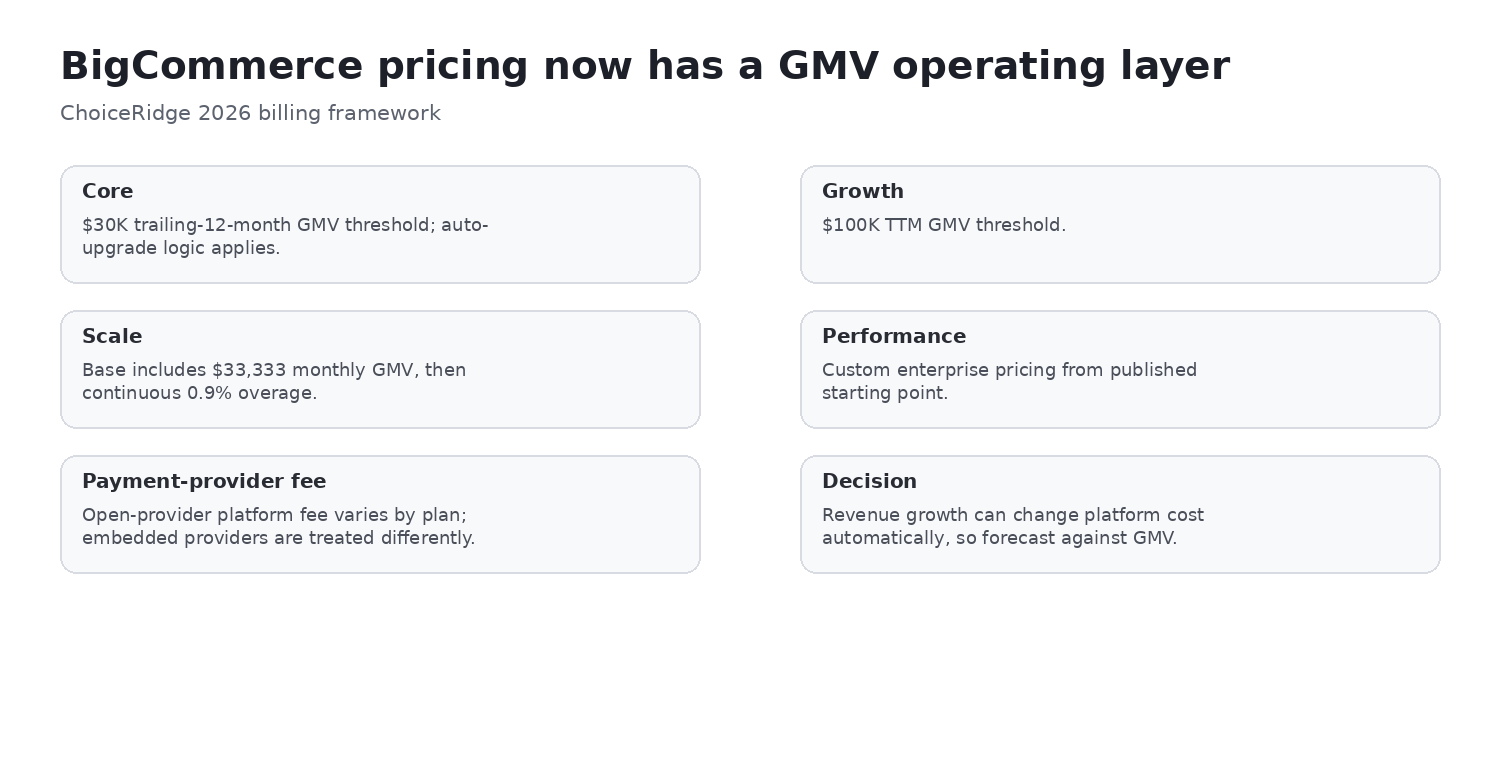
BigCommerce uses gross merchandise volume as a commercial boundary. Core and Growth publish trailing-12-month thresholds; Scale publishes a monthly allowance with overage. Revenue growth can therefore change platform cost even if feature usage is stable. Model seasonality, taxes, shipping and other components according to the contract definition of GMV.
Payments and provider fees
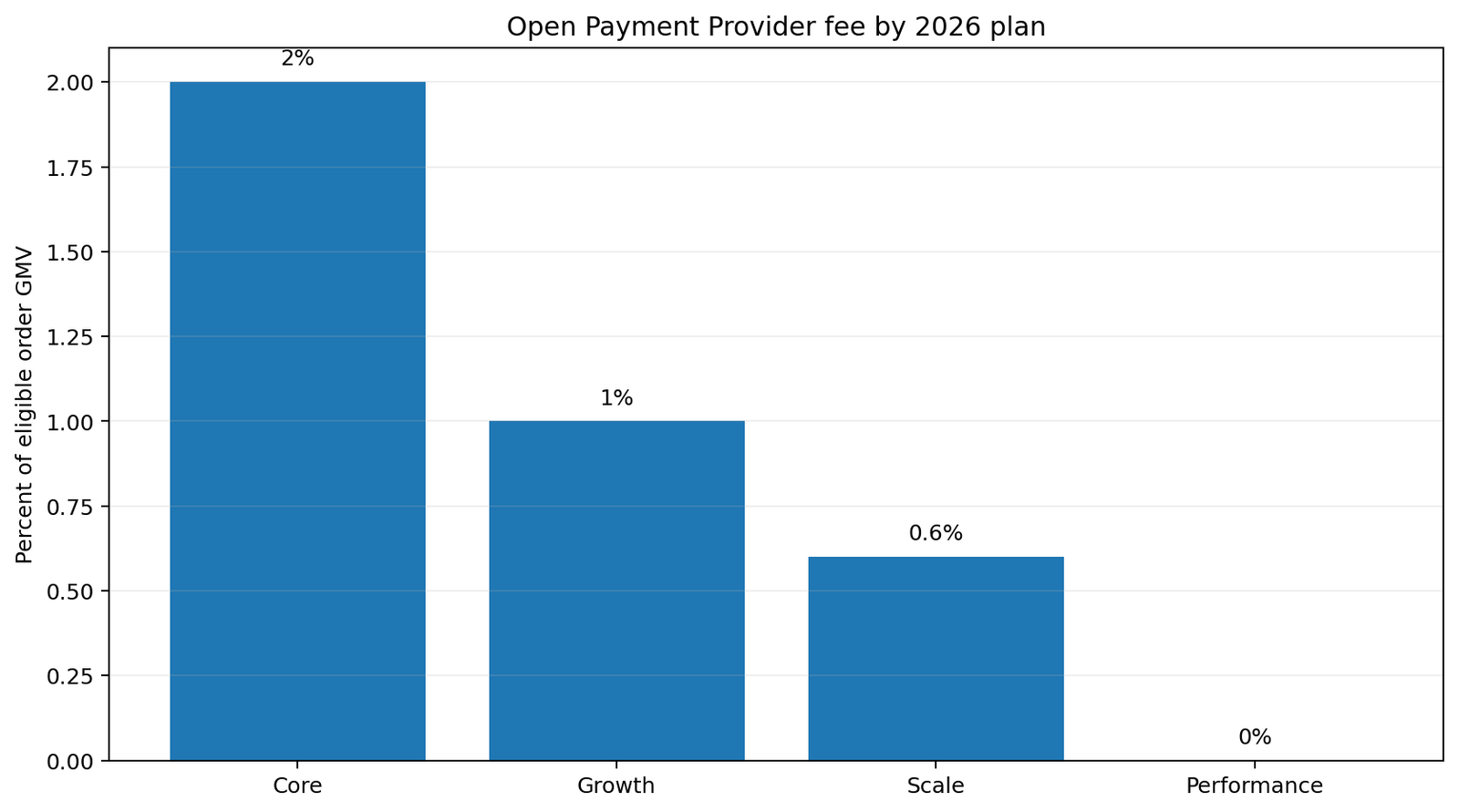
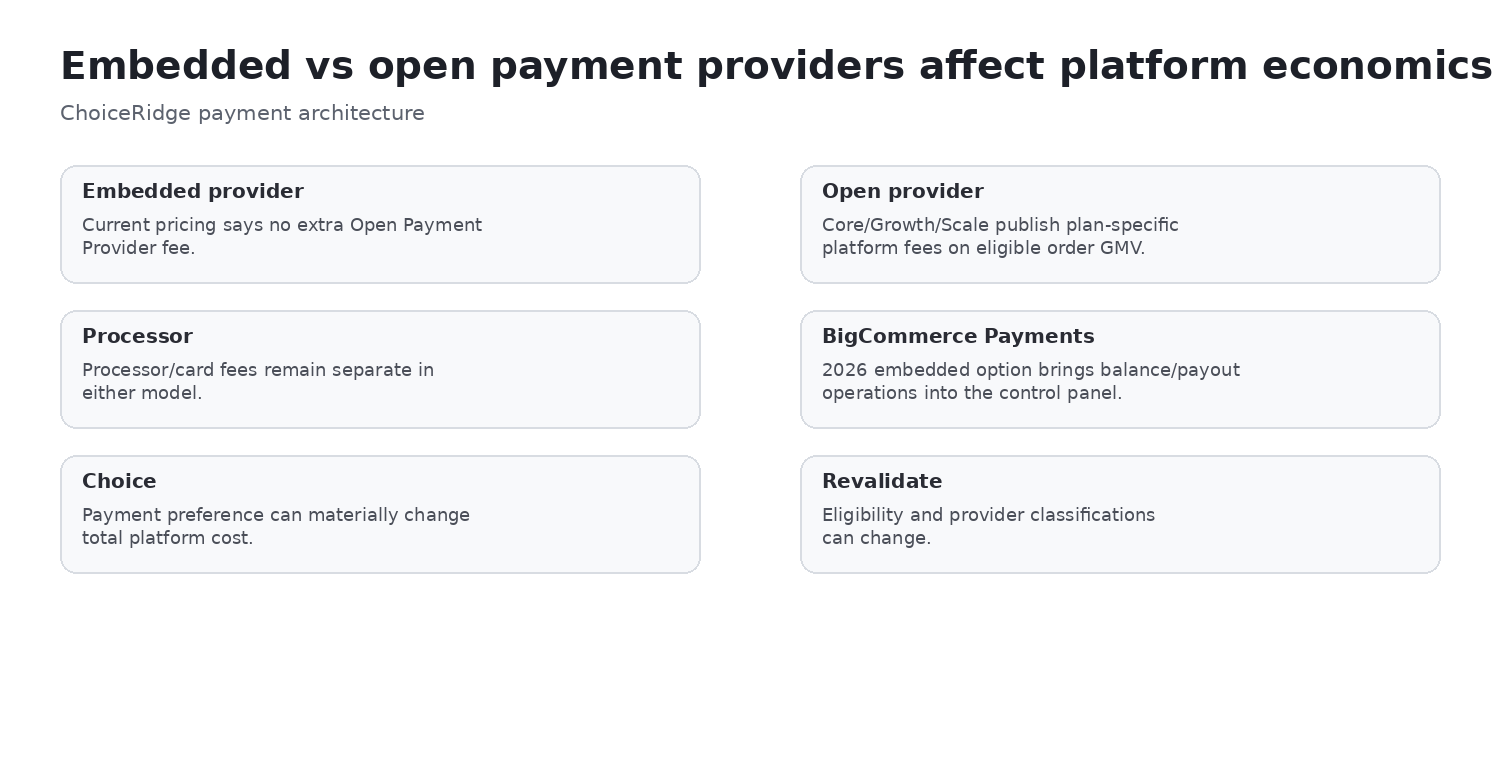
Separate five lines in the budget: subscription, processor fees, any Open provider fee, Scale GMV overage and paid apps. Current public references list Open provider fees of 2.0% on Core, 1.0% on Growth, 0.6% on Scale and none on the current Performance table. BigCommerce Payments in the US is presented as powered by PayPal; availability and economics must be checked for the merchant entity and country.
Products and order operations
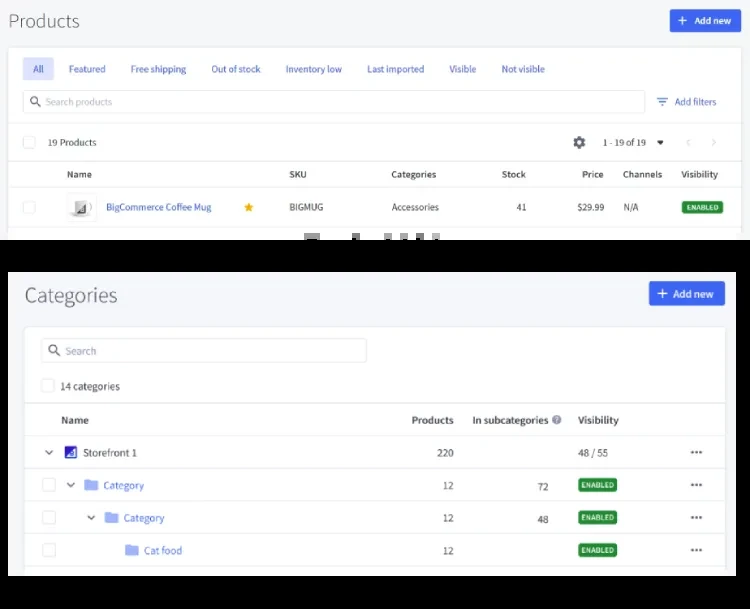
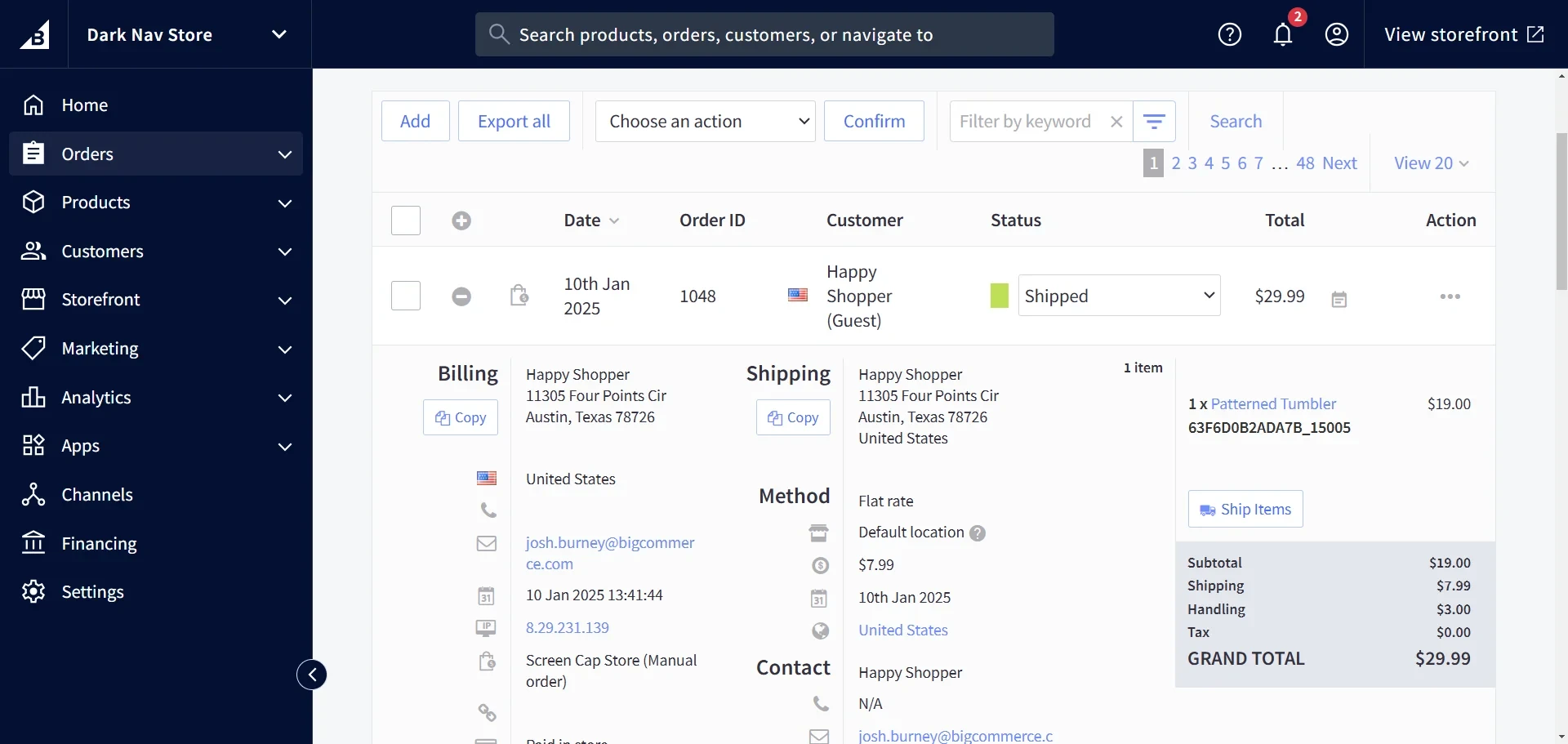
The admin supports product and order workflows without asking the merchant to assemble a hosting stack. Teams should test bulk edits, variants, promotions, returns, permissions and the exact app integrations used by operations.
Analytics and reporting
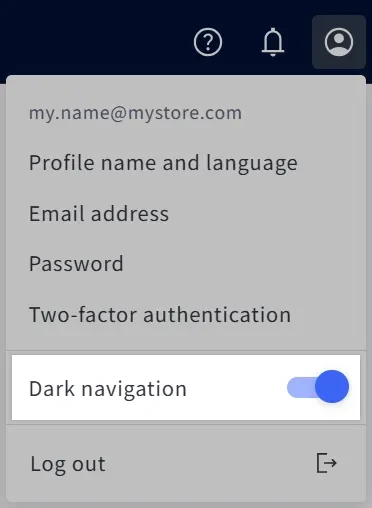
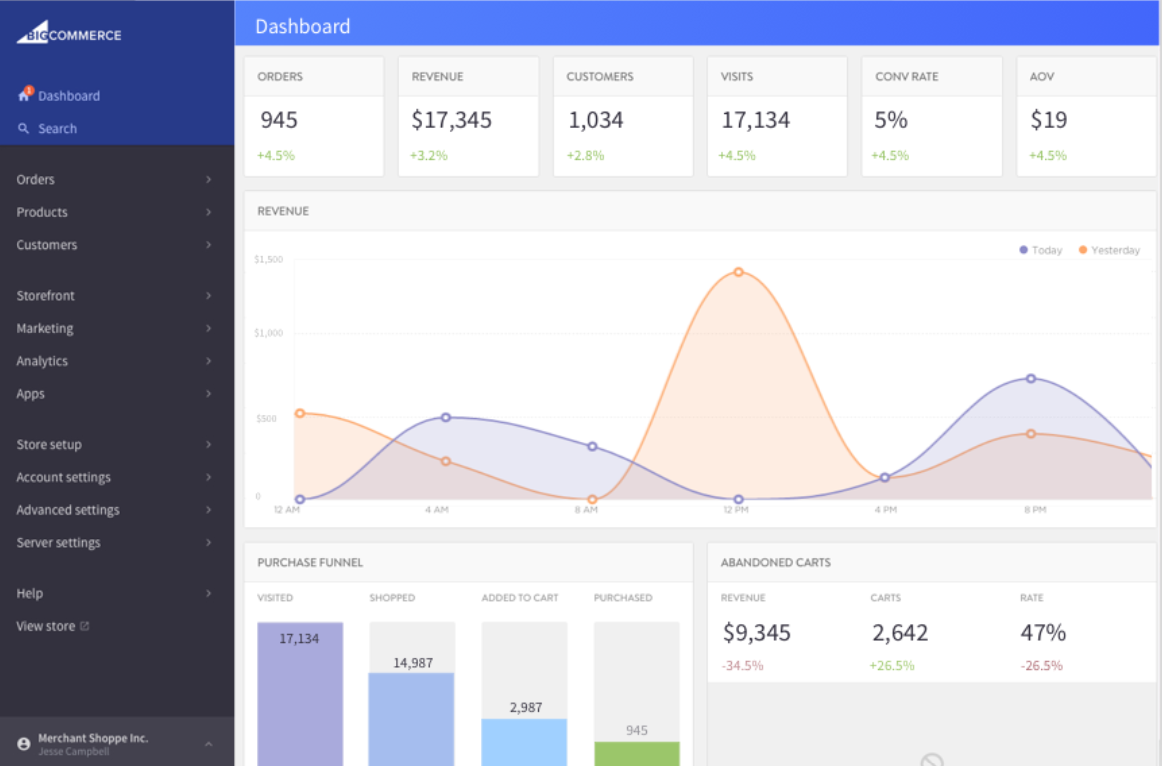
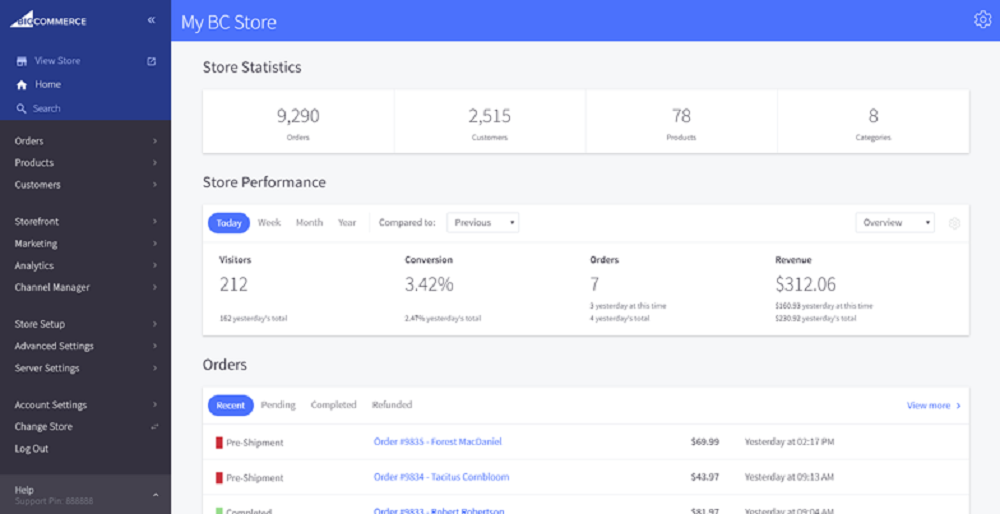
Built-in dashboards reduce the need for an immediate reporting add-on, but finance and growth teams should verify metric definitions, attribution, export depth and retention. The older dashboard image below is explicitly historical and is not evidence of the current interface.
Multi-Storefront
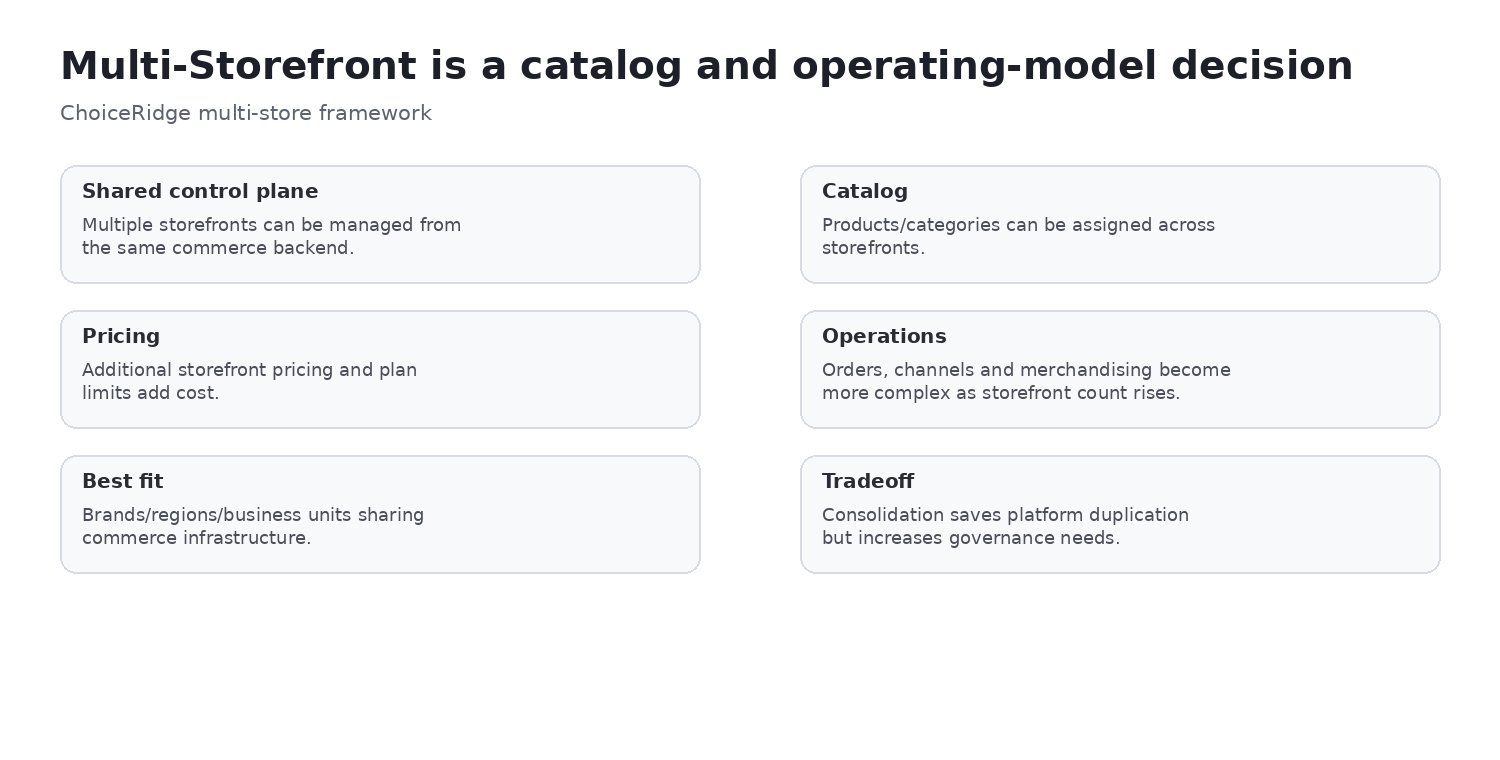
Multi-Storefront can centralize several branded or regional storefronts while sharing platform administration. Its value depends on catalog rules, pricing, domains, localization, permissions and reporting governance—define those before assuming one backend will simplify every market.
B2B capabilities
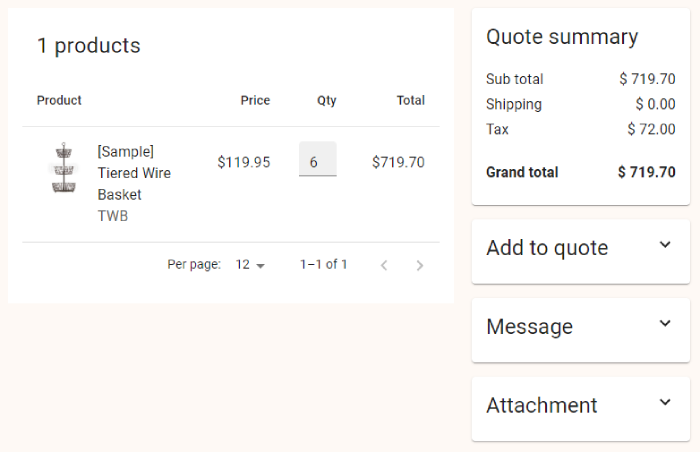
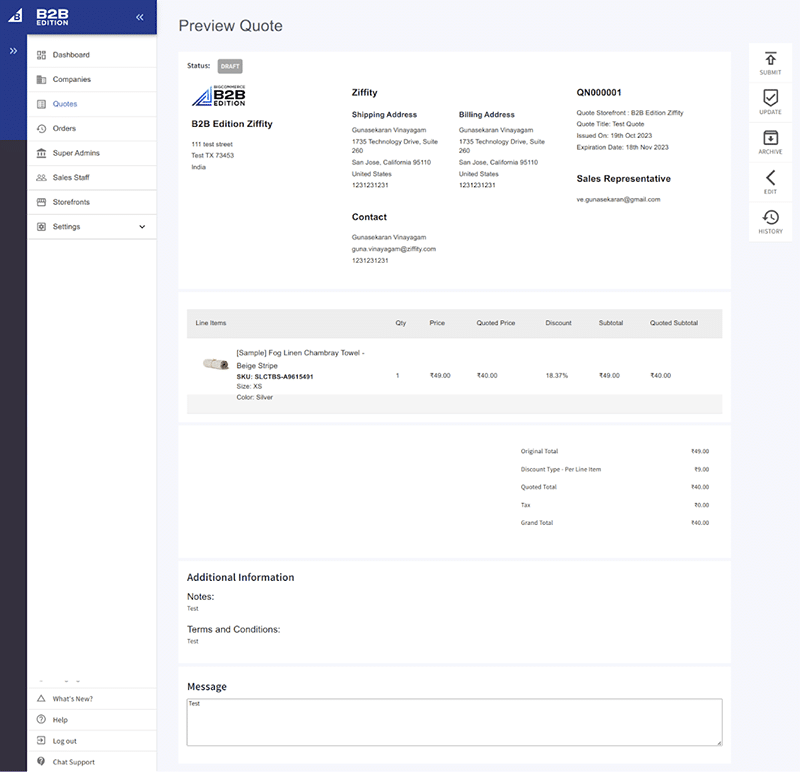
B2B Edition and related capabilities can support company accounts, roles, quotes and negotiated purchasing flows. These are not equivalent to a basic consumer checkout, so validate licensing, ERP/CRM integration, approval paths and the buyer portal against a real account scenario.
Headless, Catalyst and APIs
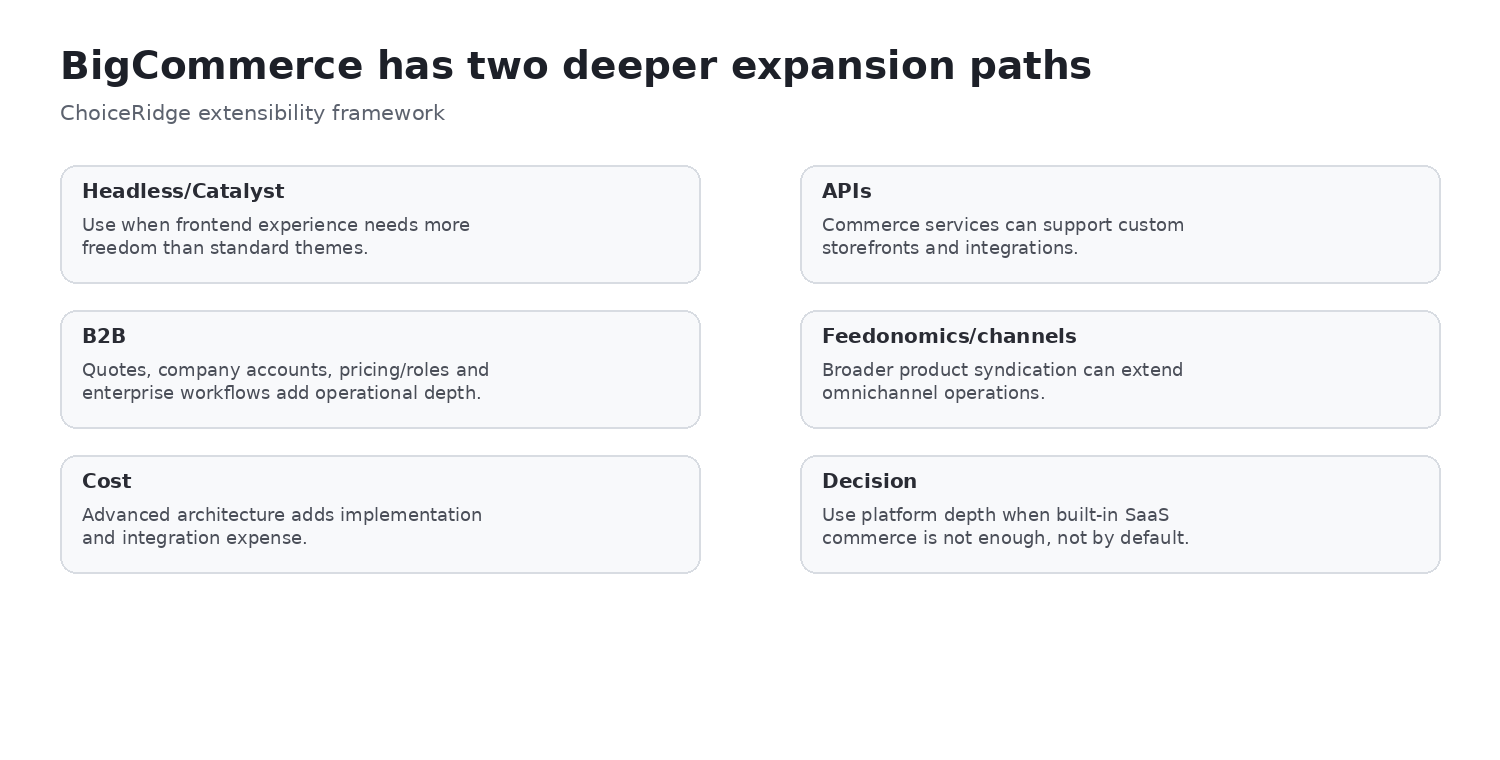
BigCommerce can serve a native storefront or a headless front end, including Catalyst-based paths. Headless increases design freedom but also creates ownership for hosting, deployment, preview, observability and front-end upgrades. API limits and integration behavior belong in technical discovery.
Channels and Feedonomics
Channel reach and feed management can be material advantages for multi-channel sellers. Confirm which Feedonomics capabilities, marketplaces and service levels are included versus separately contracted.
Total cost of ownership
- Platform subscription and GMV-driven changes.
- Payment processing and any Open provider fee.
- Scale overage or negotiated enterprise terms.
- Apps, themes, implementation and integration maintenance.
- Headless front-end hosting and engineering, when applicable.
Support and operational ownership
Hosted infrastructure moves core platform operations to the vendor, but the merchant still owns catalog quality, integrations, permissions, payments, fraud policy and release acceptance. Enterprise support terms should be written into procurement criteria.
Buyer fit, pros and cons
| Best for | Advantages | Trade-offs |
|---|---|---|
| Growing or complex merchants | Built-in commerce depth; multi-storefront, B2B and headless paths | GMV and payment economics require careful modeling |
| Small simple stores | Capable hosted foundation | May be more platform and cost than needed |
| Engineering-led brands | APIs and composable options | Front-end responsibility grows with headless |
Alternatives
- Shopify for a large managed ecosystem and simpler mainstream buying path.
- WooCommerce for WordPress ownership and extension flexibility.
- Wix Ecommerce for website-builder-led small-business commerce.
- Squarespace Commerce for design-led content and commerce.
Evidence map
Commercial facts were checked against current BigCommerce public pricing, payments and product materials. Interface images are either public/current references or explicitly labeled historical. ChoiceRidge separates published facts from fit analysis and does not infer performance from marketing claims.
What ChoiceRidge verified
- Current public plan names and displayed US price references.
- Published GMV boundaries and Open provider-fee table.
- Documented availability of Multi-Storefront, B2B and headless paths.
- Public interface references and source accessibility on the verification date.
What ChoiceRidge did not test
- No private production store, load test or checkout benchmark was run.
- No negotiated Performance contract or support escalation was tested.
- No hands-on Feedonomics, B2B Edition or Catalyst implementation was completed.
- No numeric ChoiceRidge rating is assigned without a complete comparable test set.
Frequently asked questions
Does BigCommerce charge transaction fees?
Processor fees always depend on the payment setup. Current Open-provider fees are published on several plans, so “no transaction fees” is too broad without naming the configuration.
What happens when GMV grows?
The applicable threshold, overage or contracted tier can change the bill. Model trailing and seasonal revenue before purchase.
Is BigCommerce good for B2B?
It has meaningful B2B paths, but licensing and real approval, quote and ERP workflows must be validated.
Can it run multiple storefronts?
Yes, Multi-Storefront is a core evaluation area; catalog, region and governance requirements determine the practical fit.
Is BigCommerce headless?
It supports headless architectures and Catalyst, with additional front-end engineering ownership.
Is hosting included?
Core commerce hosting is managed, while a separate headless front end may require its own hosting.
Which plan is best?
The right plan depends on GMV, provider choice, storefront count and required capabilities—not feature labels alone.
Are Standard, Plus and Pro current plans?
Current public naming is Core, Growth, Scale and Performance; older names may remain in historical materials.
Is it better than Shopify?
BigCommerce can be stronger for particular built-in and open-provider requirements; Shopify may be simpler for ecosystem-first buyers.
How should I estimate cost?
Use subscription, GMV adjustments, processor and Open-provider fees, apps, implementation and ongoing integration work.
Continue comparing
Use the best ecommerce platforms guide, compare direct alternatives, and model app spend with the ecommerce app cost calculator.